

Cycling Knee Pain: Causes, Prevention, and How to Ride Pain-Free
Introduction: Why Knee Pain Is So Common in Cycling
Knee pain is one of the most frequent complaints among cyclists — whether you’re logging winter base miles, preparing for race season, or simply commuting to work. Despite cycling being a low-impact sport, the repetitive nature of pedalling — often 5,000–10,000 revolutions per hour — makes even small biomechanical errors significant.
At Raceline Coaching, we see knee pain as a signal, not a setback. It’s the body’s way of telling you that something in your training load, bike fit, or recovery strategy needs refinement. Understanding why it happens and how to fix it can transform both your comfort and your performance on the bike.
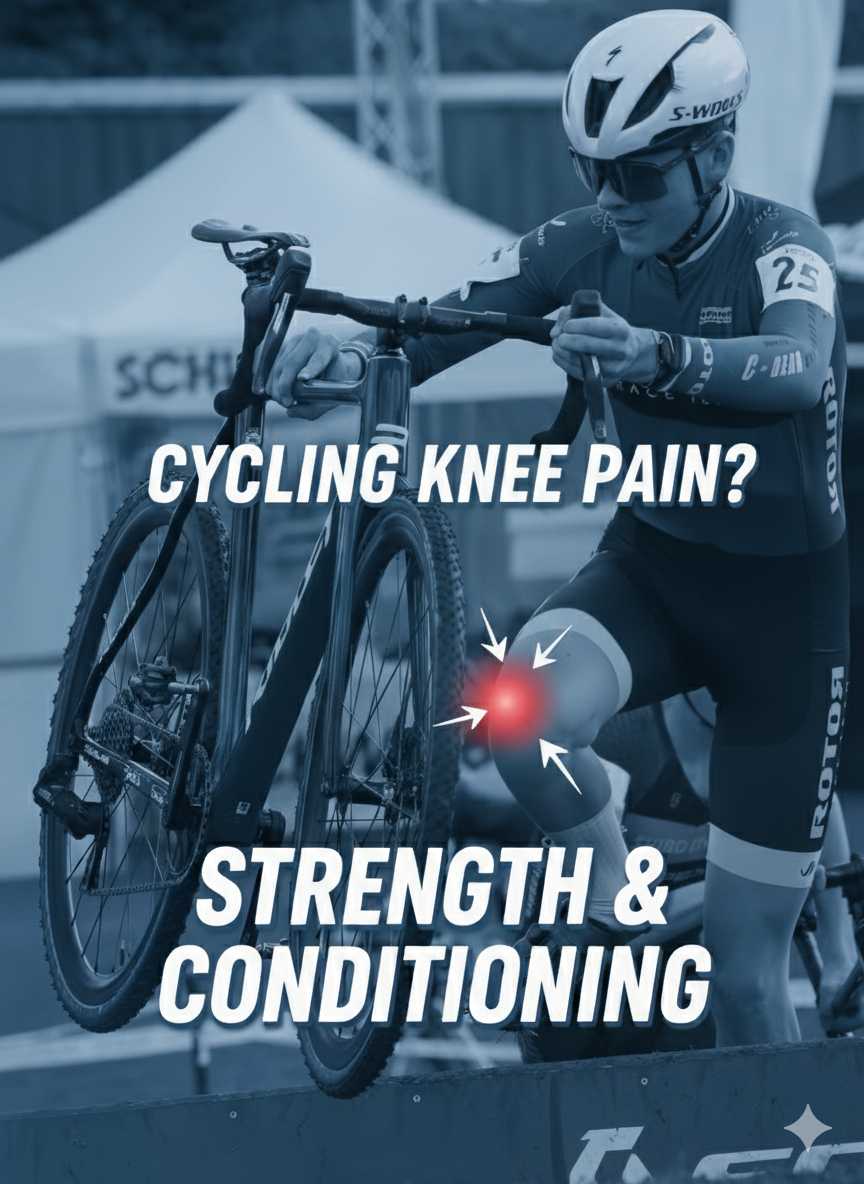
The Biomechanics Behind Cycling Knee Pain
1. Overuse and Load Imbalance
Cycling relies on repetitive, cyclical motion — which means overuse injuries are far more common than acute ones. The knee acts as the transmission between hip and foot. When one part of that chain is overloaded, the knee takes the stress.
Key factors include:
Sudden training load increases (e.g. ramping up mileage or intensity too quickly)
Insufficient recovery between sessions
Poor muscle activation patterns, especially weak glutes or tight hip flexors
Even a 5% increase in training volume without adaptation time can irritate the patellar tendon or iliotibial band, leading to classic anterior or lateral knee pain.
2. Bike Fit and Positioning
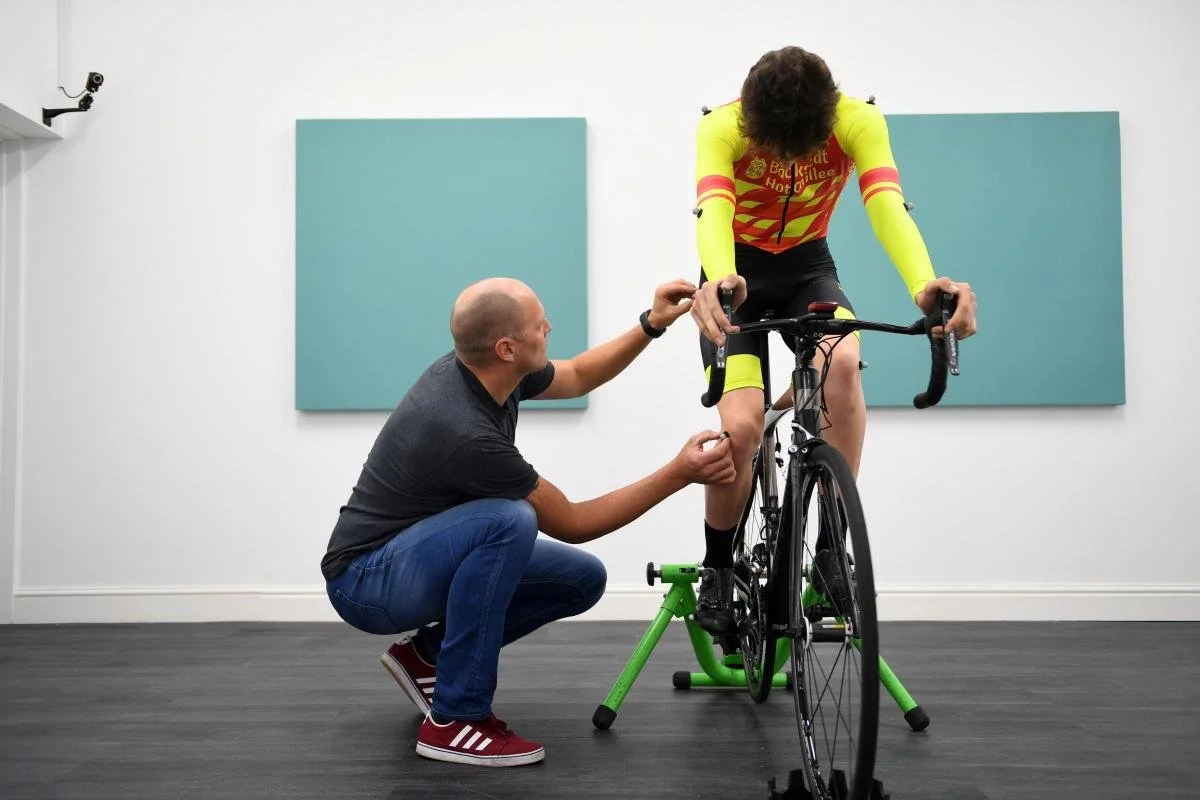
A professional bike fit is one of the most effective investments a cyclist can make to prevent pain and improve power transfer.
Common fitting issues linked to knee pain:
Saddle too low → anterior knee pain (excessive flexion at the top of the pedal stroke)
Saddle too high → posterior knee pain (overstretching hamstrings)
Cleat misalignment → medial or lateral tracking issues
Crank length → too long can increase torque stress through the knee joint
Small adjustments — even 2–3 mm in saddle height — can completely eliminate discomfort if done correctly.
3. Muscle Imbalances and Weakness
Cycling develops powerful quadriceps but can often leave the gluteus medius, hamstrings, and core stabilisers undertrained. When the glutes fail to engage properly, the quads overcompensate — increasing tension through the patellar tendon and anterior knee.
Key muscle imbalances to address:
Weak glutes → poor knee tracking
Tight quads → patellar compression
Weak hamstrings → reduced deceleration control
Tight hip flexors → anterior pelvic tilt, affecting leg alignment
Off-bike conditioning — including single-leg strength, hip mobility, and posterior chain work — should be a staple in any well-structured coaching plan.
Common Types of Knee Pain in Cyclists
Pain LocationLikely CauseTypical FixFront (Anterior) Saddle too low, excessive load, tight quadsRaise saddle slightly, improve glute activation
Back (Posterior)Saddle too high, tight hamstringsLower saddle slightly, stretch hamstrings
Inside (Medial)Cleat angled inward, poor hip controlAdjust cleats, strengthen glutes
Outside (Lateral)IT band irritation, cleat angled outwardFoam roll IT band, check saddle height/stance width
Training Errors That Lead to Knee Pain
Many cyclists experience knee pain not because of a fit issue — but due to training decisions.
Common pitfalls include:
Ignoring recovery zones: Constantly riding in Zone 3 or 4 limits adaptation and increases stress.
Skipping strength training: Muscular imbalances are far more likely without off-bike work.
Neglecting warm-up: Jumping into high-intensity efforts with cold joints increases stiffness and strain.
Poor cadence discipline: Grinding at low cadence (below 75rpm) increases joint load per pedal stroke.
Raceline Coaching emphasises smart load management, progressive adaptation, and recovery planning — the same strategies used by elite riders to stay injury-free and race-ready.
How to Prevent Knee Pain When Cycling
✅ 1. Get a Professional Bike Fit
Your body and bike must work as one system. A trained cycling coach or fitter can assess your position, cleat setup, and flexibility to find the optimal balance between comfort and power.
✅ 2. Build Strength Off the Bike
Incorporate 2 sessions per week of:
Glute bridges, single-leg squats, and deadlifts
Hip mobility and hamstring flexibility drills
Core and pelvic stability exercises
These support the kinetic chain and prevent compensatory patterns that lead to pain.
✅ 3. Warm Up and Cool Down Properly
Before each ride:
Spin lightly for 10–15 minutes (90–100rpm)
Include light activation work for glutes and hips
After each ride:
Stretch quads, hamstrings, and hip flexors
Use a foam roller to maintain tissue elasticity
✅ 4. Manage Training Load
Follow the 10% rule — never increase volume or intensity by more than 10% per week. This allows the connective tissue (ligaments and tendons) to adapt alongside cardiovascular fitness.
✅ 5. Don’t Ignore Early Warning Signs

Mild irritation or stiffness after rides can be a precursor to chronic pain. Address it early — with rest, adjustment, or guided feedback from a qualified cycling coach.
When to Seek Help
If pain persists for more than a few rides, worsens with climbing or sprinting, or limits your ability to train — it’s time for professional input. A cycling coach working alongside a sports physiotherapist can:
Identify mechanical and training causes
Adjust your program to promote recovery
Guide you back to full training without loss of fitness
Early intervention is key to avoiding long-term knee issues.
Conclusion: Train Smarter, Not Harder
Cycling knee pain is rarely about bad luck — it’s about load, alignment, and adaptation. With the right coaching approach, you can eliminate pain, maintain consistent training, and continue improving performance.
At Raceline Coaching, we combine data-driven performance analysis with personalised coaching to keep our athletes riding pain-free and performing at their best — no matter the season.
Looking for a Cycling Coach in the UK?
If you’re struggling with knee pain, overtraining, or inconsistent performance, Raceline Coaching can help.
We’ll tailor your plan around your physiology, schedule, and goals — ensuring every pedal stroke moves you forward.
👉 Visit www.racelinecoaching.co.uk to start your personalised coaching journey today.
Raceline Coaching, on behalf of SafeBike, is now offering bike box rentals from Newport Velodrome. Boxes are available at £10 per day and can be booked for periods of up to 4 weeks. These easy-fit bike boxes allow you to keep your handlebars on while keeping your bike safe and secure.
What you need to do :
Place an order for £10. This will trigger the box box company ( SafeBike ) to get in touch with you about your order and timings.
Safebike will continue the process.